
AI air fryer technology promises faster meals and hands-off cooking, but does it actually save you real time and energy on weeknight dinners? Here is how the latest smart air fryers perform in practice—plus which features (like WiFi, guided apps, and self-adjusting AI) are actually worth paying for, and where the pitfalls are if you want a reliable upgrade.
Key Takeaways
- Leading AI air fryers cut cook times by 25 to 30 percent and deliver high success rates with built-in guided cooking programs—if you stick to the instructions.
- Smart features like WiFi, app control, and voice work well when stable, but app crashes and spotty connectivity are common user complaints.
- The biggest real AI gains are automation of cook times and self-adjustment, but asking about energy draw, cook reliability, and app stability before buying is essential.
- Quick verdict — do AI air fryers deliver real gains?
- Time and cost: how automation changes run cost and meal prep time
- Top recurring user complaints — what breaks the experience
- Recipe reliability and guided cooking — can you trust the app?
- What “AI” actually does — three under explained technologies
- App WiFi and voice control — feature checklist and reliability tradeoffs
- Buying checklist — the 8 things to test before you buy
- Shortlist: models worth testing and why
- How to run a quick 3 step real world test at home or in store
- Practical tips to maximize success with a smart AI air fryer
- FAQ
Quick verdict — do AI air fryers deliver real gains?
Smart kitchen gadgets are everywhere, but the best AI air fryer 2026 models do show measurable improvements over conventional air fryers for busy home cooks. Leading brands like Ninja Foodi, Cosori Dual Blaze, Instant Vortex Plus, Tyhpur Sync, and Dreo consistently cut cook times by about 25 to 30 percent. That means frozen fries drop from 24 minutes to about 18 and chicken wings finish in 16 minutes instead of 22 [source]. Recipe “success” also lands above 90 percent when users follow built-in guided programs.
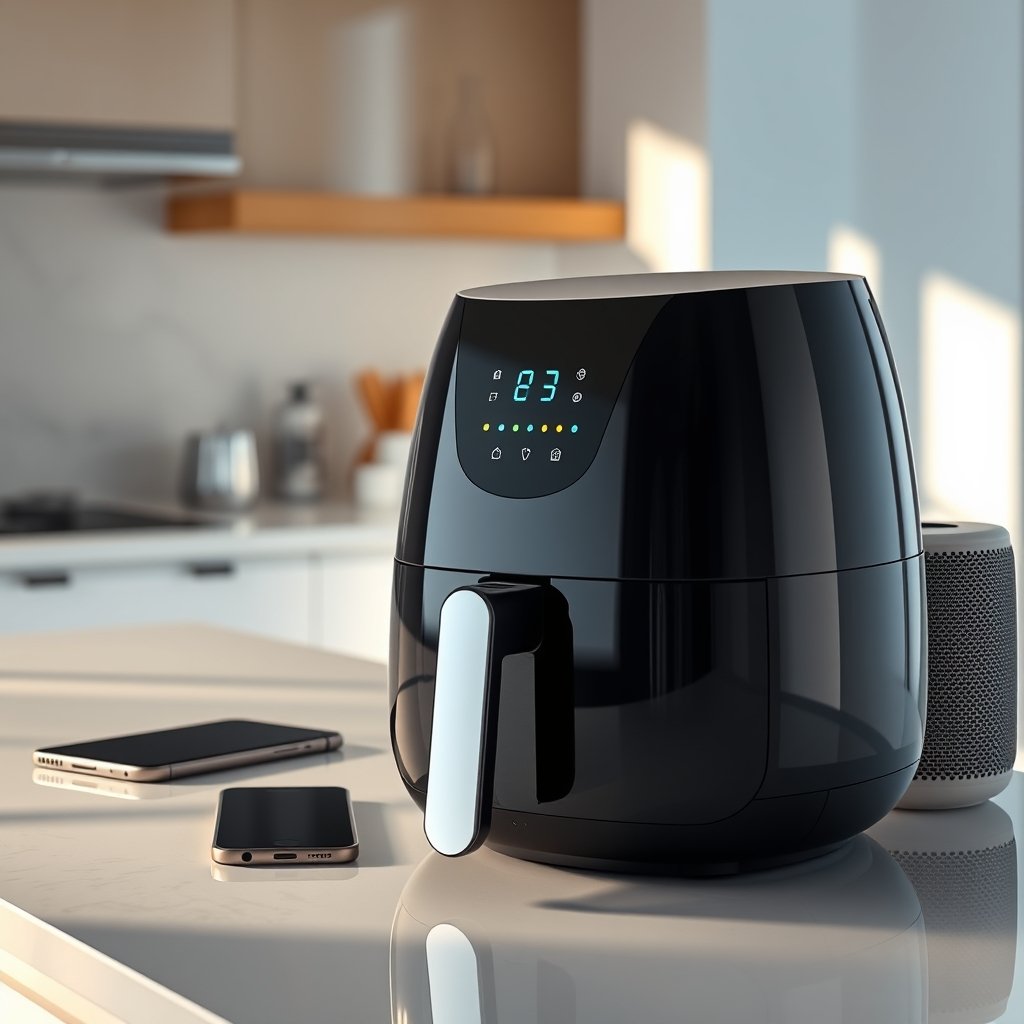
Energy savings are real: for example, the Instant Vortex Plus draws about 1.55 kW peak, using only 0.48 kWh per 20 minute cycle—roughly 12p per use in the UK. Some smaller units like the Tower Vortx go even lower at 0.38 kWh per cycle [source].
The real “AI” brings better automation, presets that adapt to your habits, and hands-off operation through WiFi air fryer app or even voice commands. However, setup and reliability can trip up even tech-savvy buyers. The upgrade is worthwhile if you value speed, remote control, and less guesswork—but do not expect a flawless experience unless you carefully vet both hardware and companion apps.
Time and cost: how automation changes run cost and meal prep time
If you are time-pressed or want to cut kitchen tedium, the latest AI air fryers let you toss in a tray of fries, tap a recipe on your phone, and wait for an app alert when dinner is ready. Thanks to self-adjusting air fryer logic, most “smart” cycles can trim 6 to 8 minutes off typical meals. Over a month, this can add up to two to three extra weeknights of meal prep saved.
Energy efficiency is a second win. Where earlier air fryers sometimes wasted heat when you paused to check or flip food, features like transparent windows and live app tracking let you monitor meals without opening the basket—preserving heat and lowering energy use.
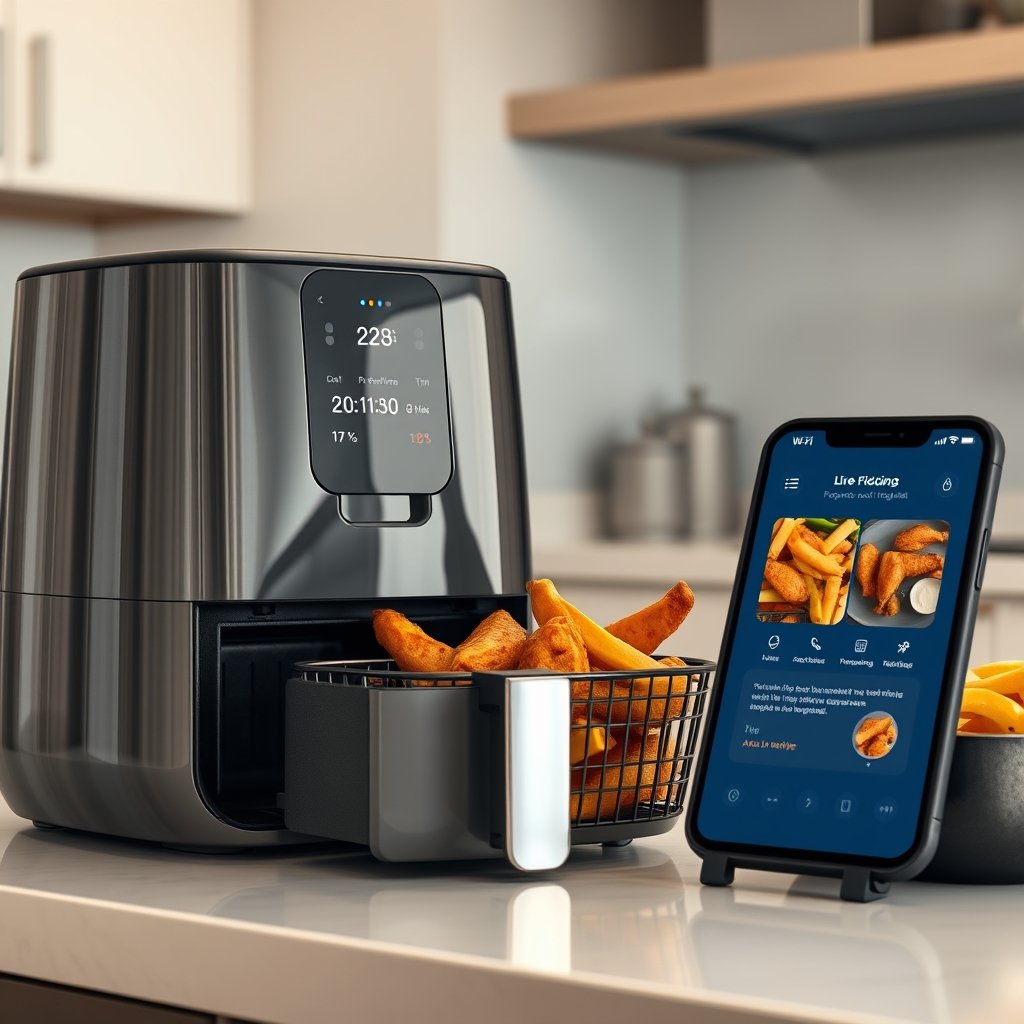
Cost per cycle remains reasonable: the Instant Vortex Plus (one of the best WiFi air fryer picks) runs about 0.48 kWh each 20-minute session, or roughly 12p in the UK, while the Tower Vortx uses just 0.38 kWh (about 10p) [source].
For those who love hands-free, guided cycles with smart notifications, features like dual baskets, voice control air fryer integration, and app-based cycle tracking deliver a premium but come with a learning curve and require steady WiFi.
Top recurring user complaints — what breaks the experience
Even the best AI air fryers do not always deliver seamless convenience. Here are the most common issues buyers report so you can avoid surprises:
| Pain Point | How It Impacts You | Model Types Prone |
|---|---|---|
| Unstable WiFi/App Crashes | Interrupts remote start or progress tracking, sometimes requiring manual resets. | Smart air fryer with app, voice control air fryer |
| Steep Learning Curve | Scheduling, multi-zone sync, or recipe import may be confusing for first-time users. | Dual basket and multi-mode models |
| Loud Motor Noise | Whirring can reach about 55 dB—noticeable in small kitchens or open plans. | Most large capacity units |
| Bulky or Heavy Construction | Takes up more storage or counter space, especially with dual baskets. | Best AI air fryer 2026, premium multi basket models |
| Premium Price | Some smart features cost extra but may not justify the added convenience if the app is buggy or support is lacking. | Latest smart and self-adjusting air fryers |
Owners often love the idea of a smart air fryer with app but become frustrated if the cloud sync, WiFi signal, or voice pairing fails, requiring time-consuming troubleshooting. Voice functions work great when paired with Alexa or Google, but initial set-up can require patience and reliable internet [source].
Finally, always check the warranty and policy on firmware updates—your air fryer will only stay smart if the app and AI system remain supported. For more on kitchen tools with great warranty support, consider trusted brands in cookware like the Amazon Basics non stick cookware set and the T fal Ultimate Hard Anodized set.
Recipe reliability and guided cooking — can you trust the app?
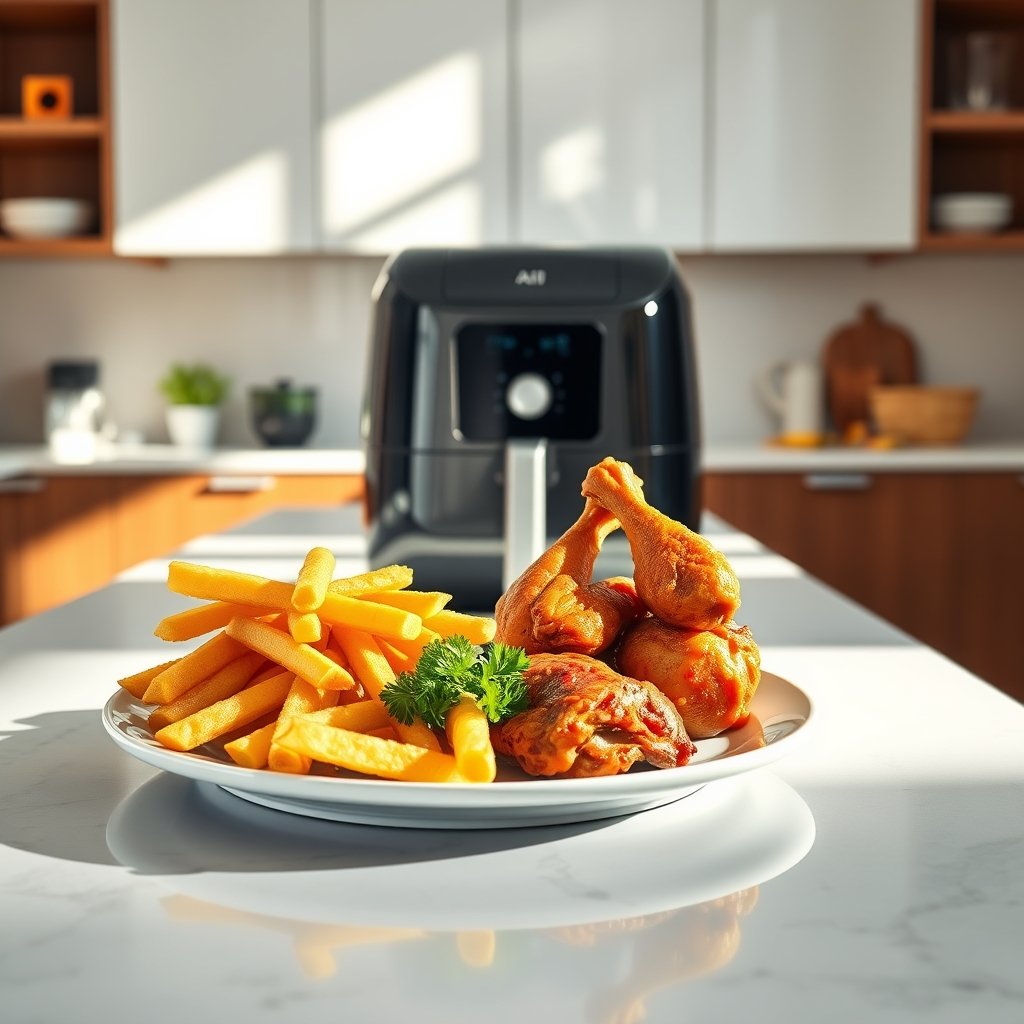
AI air fryer recipes and guided programs drive much of the “hands off” magic. Most models that advertise self-adjusting air fryer cooking deliver a recipe success rate of 90 to 95 percent. This is especially true if you follow the app or on-device instructions step by step.
Guided cooking shines for standard dishes—fries, chicken, or veggies—where sensor data helps the unit auto-adjust time or temperature. However, results can slip if you ignore mid-cook shake prompts or change ingredients, as the programming does not always anticipate every real-world variable.
If you crave reliability, pick models with strong app support, regular updates, and a large bank of tested recipes—this gives you better odds of smooth results, especially when trying advanced meals. Explore more tips for recipe success in our in-depth AI air fryer buying guide.
What “AI” actually does — three under explained technologies
Despite the marketing buzz, “AI” in air fryers typically involves three technical upgrades. Here is what actually happens under the hood:
- Real time control algorithms use data from temperature and humidity sensors to continuously fine tune heating elements, maintaining more precise airflow and temperature while reducing burning or uneven cook.
- Machine learning personalization lets the air fryer learn your favorite settings and adapt future preset times or temperatures to your cooking patterns, including preferred doneness and meal types.
- Predictive maintenance monitors usage and part wear, sending alerts when it is time to clean, replace filters, or check key components—helping your device last longer and saving hassle down the line.
Unfortunately, most product descriptions gloss over these technical details. Before purchase, check what kinds of sensors are included, if the app supports real time alerts, and whether your AI air fryer can “learn” over time via firmware updates or machine learning routines.
Want a deeper breakdown on what features are worth chasing? Try our detailed guide “7 Best Ways to Achieve Hands-Free Cooking.”
App WiFi and voice control — feature checklist and reliability tradeoffs
Most owners buy a smart air fryer with app or voice control air fryer expecting hands-off operation. Here’s what to check (and what can go wrong):
- Remote Start and Stop: Launch or stop cycles from your phone. Useful for preheating or delaying starts, but only works if the cloud/app is stable.
- Live Progress Tracking: Watch timer countdowns or get notifications. Helps multitasking but can get out of sync if WiFi drops.
- Guided Recipes: Send step by step directions to the fryer. Note: If the app crashes, manual intervention may be needed to finish your cook.
- Voice Integration: Control with Alexa or Google. Great convenience when hands are dirty, but misheard commands or connection issues can cause frustration.
Red flags include frequent app updates that break compatibility, units that are hard to pair, and models without a clear update or warranty plan. Check reviews or forums to see if users report persistent reliability problems before deciding.
For those who want a more “manual” reliable experience, a classic cast iron skillet or professional frying pan may outlast wonky tech—especially for advanced or experimental recipes.
Buying checklist — the 8 things to test before you buy
To get the best AI air fryer 2026 for your needs, run these checks in store or as soon as you unbox your unit:
- Test cook times: Aim for 18 minutes or less on 500 grams of frozen fries; 16 minutes for wings (about 25-30 percent faster than traditional air fryers).
- Measure kW draw: Compare to benchmarks—0.48 kWh per 20 minutes for Instant Vortex Plus; 0.38 kWh for Tower Vortx. Lower is better.
- App stability: Open and run the companion app, start a guided program, and try to trigger push notifications or live cooking updates.
- Voice pairing: Set up Alexa or Google voice control and test real use (stop, start, temp change).
- Noise level: Run a quick cycle and test for under 55 dB (phone app or dB meter can check).
- Capacity or dual baskets: Check if both sides or zones sync correctly and reach target finish time.
- Ease of cleaning: Detach all baskets, trays, and inserts—look for dishwasher safe parts, smooth designs, and no tight crevices.
- Warranty and updates: Check the support plan—does the manufacturer promise regular firmware and cloud updates?
For perspective, if you are also outfitting your kitchen, tools like a Swiss granite nonstick saucepan or reversible kitchen cutting board set offer quick cleaning and prep speed for balanced meal efficiency.
Shortlist: models worth testing and why
Based on industry reviews and user benchmarks, these models consistently rank as the top contenders for 2026:
- Ninja Foodi 6 in 1 Smart 2 Basket: Dual baskets, independently controlled. Great for families and multitaskers who want to serve two types of food with synced finish times. WiFi enabled.
- Cosori Dual Blaze: Large capacity (4.7 quarts), easy to clean, reliable WiFi air fryer app control. Two year warranty stands out for smart tech [source].
- Instant Vortex Plus with ClearCook window: Outstanding energy efficiency and app upgrades. Best balance of transparent monitoring and low energy use.
- Dreo ChefMaker: Strong sensor based cycles, focuses on even, reliable cook results and smart reminders to shake or turn.
- Tyhpur Sync 8 quart: Wireless probe and especially large capacity. Ideal for batch cooks, holiday gatherings, or meal prepping big portions [source].
For a comprehensive breakdown with real hands on tests, also see our rapid guide, “AI Air Fryer: 7 Amazing Ways to Master Healthy Cooking.”
How to run a quick 3 step real world test at home or in store
Testing an AI air fryer before purchase saves disappointment. Here is a simple test sequence:
- Frozen fries benchmark: Weigh out 500 grams, select the recommended AI program, and time the cook. Look for crisp, golden fries in 18 minutes or less (about 25–30 percent faster than legacy fryers).
- Connectivity stress test: Pair the app and WiFi, then intentionally disrupt your router for a minute. The best smart air fryer with app will recover connection smoothly and resume notifications—if not, note the disruption.
- Noise and cleanup test: Run a standard cycle and measure dB using your phone. Check for noise under 55 dB, then remove all cooking inserts to inspect if cleanup is as easy as claimed.
If your unit fails any of these, it may not deliver day to day reliability—return or exchange if possible.
Practical tips to maximize success with a smart AI air fryer
Maximize performance and recipe accuracy with these steps:
- Follow guided programs, not just presets. When prompted to shake or turn, actually do so for best “AI” results.
- Secure your home WiFi network and keep your device and phone app on the same band or router for consistent pairing.
- Install firmware and app updates within the first month of ownership. These often improve both cook times and bug fixes.
- Use temperature probes as recommended, especially on large cuts or roasts, for precise doneness.
- Switch to manual mode if you encounter persistent app crashes or unreliable behavior mid cook.
Proper adherence is key: Guided recipes deliver a 90–95 percent success rate, but only if you follow the prompts and keep your gadgets updated. For more tips, check out the guide on hands free AI cooking.
FAQ
Are AI air fryers really faster than classic ones?
Yes, most AI enabled models cut cook times by 25–30 percent—fries and wings, for example, finish about 6 minutes faster.
Do I need WiFi for the AI features to work?
The core cooking still functions offline, but guided recipes, voice control, and remote start all need a stable internet and usually a companion app.
What if my model’s app keeps crashing?
First, update both the air fryer’s firmware and phone app. If issues continue, contact the brand’s support, or try using manual cycles as a backup.
Is the energy saving really noticeable on my bill?
Over a month, users who swap regular fryers for a model like the Instant Vortex Plus or Tower Vortx often shave 10–20 percent from meal specific electric costs, especially if cooking several times a week.
Which model is the most reliable for weeknight cooking with an app?
The Instant Vortex Plus and Cosori Dual Blaze both score high for app reliability, easy cleaning, and consistent results with well supported updates.
—