
Portable blender bottle sales are surging for fitness-minded and busy travelers who want fast smoothies with zero mess, but most guides skip over what really matters: blend power, leak resistance, and battery safety. Here’s what the data and real-world testing reveal before you buy.
Key Takeaways
- Market growth reveals mainstream adoption: projected from USD 151.5 million in 2023 to USD 336.3 million by 2033, fueled by urban professionals and fitness travelers.
- Performance, leak resistance, and battery safety are the “make or break” factors for picking the right model. Ignore them and risk messes, weak blends, or battery hazards.
- Not all models are created equal—know the red flags (poor motor power, unreliable seals, battery recall risk) to avoid disappointment.
- Why portable blender bottles are worth considering right now
- What buyers care about first: blend quality, leak resistance, and battery safety
- Blending performance: motor wattage, blade design, and real-world textures
- Leak‑proof design and lid integrity — avoiding spills on the go
- Battery life, charging, and safety — what USB rechargeable means in practice
- Common complaints (and how to avoid them): motor, battery, and leakage troubleshooting
- How to choose the right portable blender bottle — a quick buyer’s checklist
- Minimal‑cleanup routines: recipes, cleaning hacks, and time‑savers
- Shortlist: recommended product types and red flags to avoid
- Quick comparison table (what to expect at different price points)
- Final verdict — who should buy a portable blender bottle (and who should skip it)
- FAQ / quick answers
Why portable blender bottles are worth considering right now
Portable blender bottles have shifted from niche gadget to essential appliance for people on the go. Millennials, city professionals, and fitness travelers are fueling this demand. Industry figures show the global portable blender market hit about USD 151.5 million in 2023. North America leads the way, accounting for roughly 32 percent (about USD 48 to 49 million), while Europe and Asia Pacific catch up fast. Importantly, forecasters predict this will more than double by 2033, reaching around USD 336.3 million with annual growth rates between 8 and 10 percent. An estimated 20 to 22 percent of people in these target groups already own a personal blender or mini portable blender in 2024.
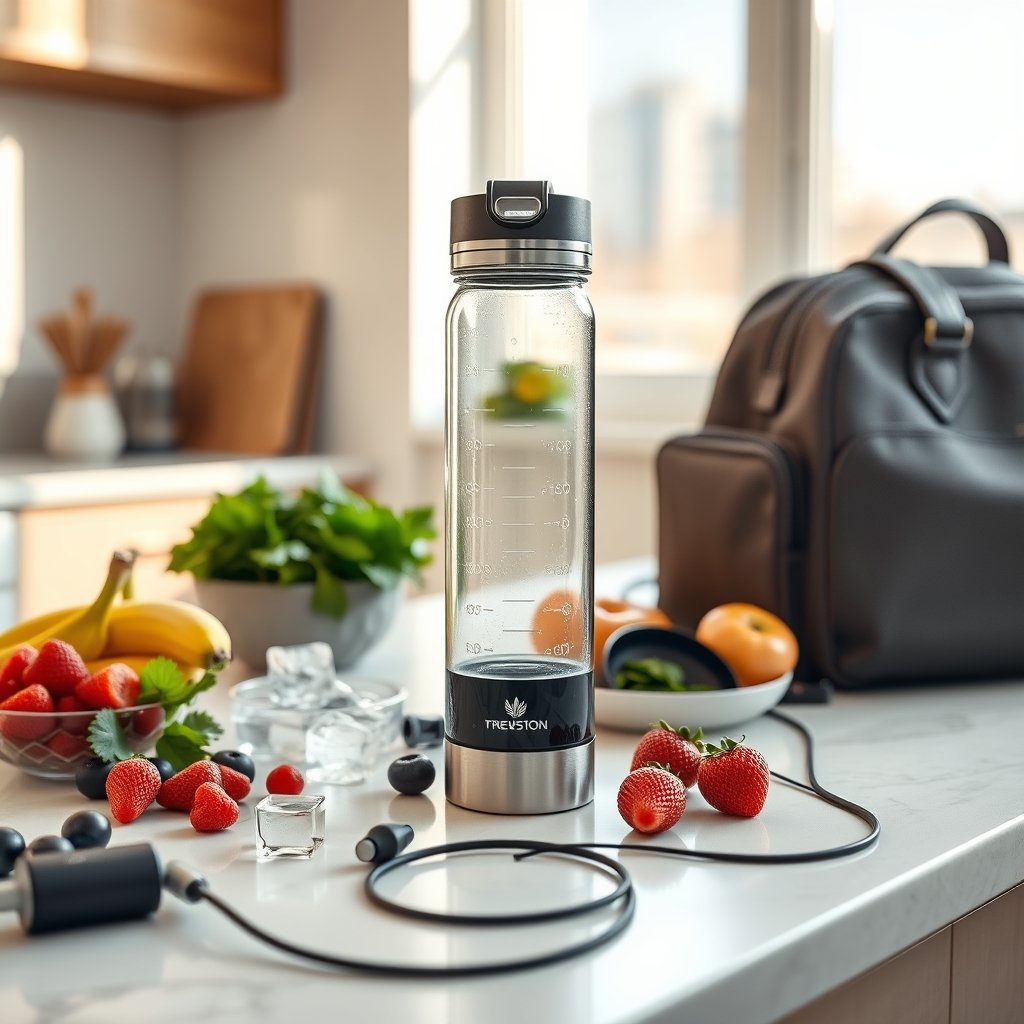
What’s driving the shift? It’s not about novelty. It’s the day to day convenience—blending protein shakes at the gym, making quick breakfast smoothies during a busy commute, or prepping healthy snacks at a coworking desk. Battery-powered and USB rechargeable options solve real pain points for the active, mobile consumer. Instead of hunting for an outlet or waiting in line for café shakes, you control your nutrition anywhere.
Analyst reports back this up. See this market research and news from Market.us for a sense of just how rapidly this product class is growing. The bottom line: portable blender bottles are here to stay and are quickly becoming as common as stainless steel water bottles for those who value speed, health, and independence.
What buyers care about first: blend quality, leak resistance, and battery safety (the three deal‑makers)
When shopping for a personal blender bottle, three features genuinely matter—based on industry research and thousands of user reviews. First is performance: does the mini portable blender actually blend a smoothie, or does it leave chunks behind and struggle with anything thicker than milk? Second is leak resistance: will the travel smoothie blender spill all over your work bag or gym locker, or is it sealed tight, even if jostled? Third is battery and thermal safety: does the USB rechargeable blender bottle consistently run through several blends on a single charge, without overheating, shorting out, or posing a recall-worthy risk?
According to recent testing by Wirecutter and aggregate review analysis, these remain the top three deciding factors—yet many competitor articles fail to explain them in clear, test-based terms.
Some stats that highlight their importance:
- Research flags these three items as critical but under-discussed among review sites: (1) blending performance and blade design, (2) leak-proof sealing, (3) battery safety with proper thermal protection.
- Major industry recalls—like the 2023 BlendJet 2 incident that affected 4.8 million units—show why battery checks are non-negotiable.
If you are risk-averse and want a unit you can trust in your work bag, prioritizing these three pillars is the starting point.
Blending performance: motor wattage, blade design, and real-world textures
Real-world performance starts at the motor. A mini portable blender typically lists motor wattage and blade speed (RPMs), but these numbers alone can mislead. Most travel smoothie blenders do fine with soft fruits and plenty of liquid, but struggle with ice or thick, frozen fruit—often leading to shutdowns. Some models, for example, tout 12000 RPM or more, but without meaningful torque or sturdy blades, they leave leafy greens or nut butters chunky and under-blended.
User data from recent lab testing and Amazon-style reviews highlight this:
- Frequent complaint: “My portable blender bottle stalls or shuts off when I add much ice or frozen berries.”
- Travel smoothie blender models with small motors are often only reliable for very liquid recipes: think milk, protein powder, and banana, not frozen smoothie bowls.
To make an informed choice, look for:
- Motor wattage over 100W for basic smoothies; 150 to 300W for thick shakes or ice (where available).
- Stainless steel blade design — ideally with multiple levels or serration for better circulation and chunk reduction.
- Continuous mode (at least 20 seconds) and a pulse function for better texture variety.
Quick tip: For a mini portable blender, overfilling or packing dense frozen fruit is the fastest route to disappointment. Always add sufficient liquid and layer softest ingredients closest to the blades.
Leak‑proof design and lid integrity — avoiding spills on the go
One of the most common frustrations with a blend and drink bottle is leakage. Too often, soft silicone gaskets or weak snap lids allow drips or major spills, especially if the bottle is knocked over in a gym bag or car cupholder. Even more insidious are leaks around the blade assembly base, where the connection must endure high vibration.
Here’s how better models solve the problem:
- Thick, food-grade silicone seals that seat deep inside both the lid and blade housing.
- Screw-lock lids rather than simple snap closures, for more uniform sealing pressure. Look for audible clicks or visible indicators that show a full seal.
- Blade-to-base locking mechanisms—the blade jar should lock firmly to the motor base. Some rely on magnets (easy for cleaning) but check for a secure fit.
- Travel-friendly features like flip-top drinking spouts and dust covers are a must for street use or the gym.
Before committing, try this quick test: fill the bottle with water and invert it over your sink. Press lightly, shake a bit. Any sign of leaking, and it is not ready for daily bag duty.
Want more leak-resistant gear? See our review of the Stanley IceFlow flip straw tumbler for comparison.
Battery life, charging, and safety — what USB rechargeable means in practice
USB rechargeable blender bottle models have revolutionized portable blending, but user experiences vary wildly. In practice, most mini portable blender devices promise 8 to 20 blends on a full charge. The reality is usually fewer—especially if you use ice or harder produce.
Problems reported by users include:
- Short runtime and unexpected shutdowns, sometimes after just 4 to 7 blends per charge.
- Devices refusing to charge from lower-wattage power banks.
- Worrying battery heat at the start or end of a blend cycle.
- High-profile recalls: the BlendJet 2 saw 4.8 million units recalled in 2023 because of overheating, blade breakage, and fire risk, highlighting the need for real Thermal shutoff and overcurrent protection.
Look for:
- Thermal shutoff and overcurrent protection in the device specs (if not listed, treat with caution).
- Charging via USB-C for better compatibility and faster, safer charging cycles.
- Clear run-time estimates. If the seller cannot state realistic blends-per-charge, move on.
For energy-conscious travelers, check that the device will charge from a standard power bank, not just a wall adapter. Some users find themselves stranded at the gym with a dead blender and no way to recharge.
Common complaints (and how to avoid them): motor, battery, and leakage troubleshooting
Browsing through user reviews and lab roundups, three issues stand out for the protein shake blender bottle and mini portable blender crowd:
- Insufficient motor power. The most common reason for returns is engines that cannot handle anything beyond soft fruit and protein powder, often leading to chunk-filled shakes.
- Battery woes. Short battery life, rapid depletion, or inconsistent power delivery leave users stranded. Many forget that full recharge times typically take two to three hours, especially after several blends with ice.
- Leaks and messy cleanup. Users mention base leaks, poorly sealing lids, or difficult-to-clean blade units that retain odors, especially with dairy or leafy greens.
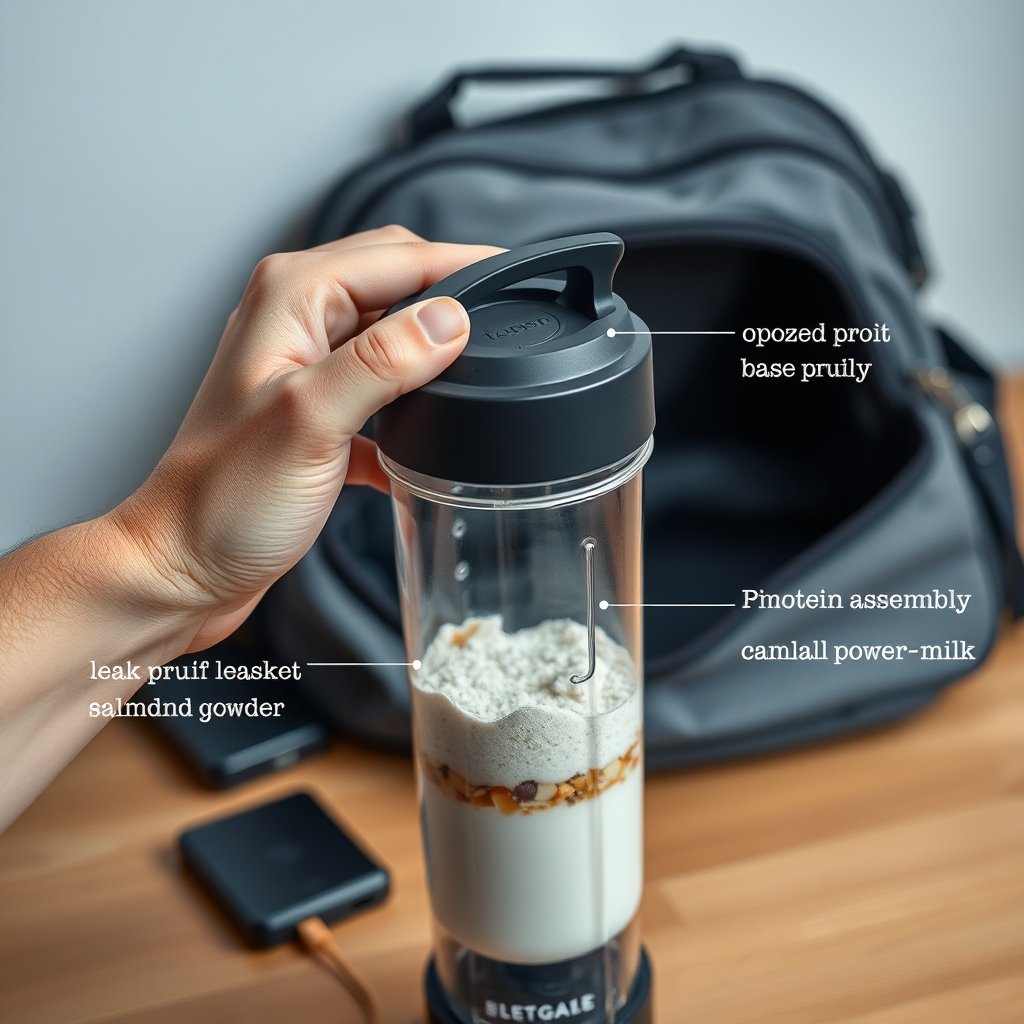
For stronger protein shake blender bottle results despite a weak motor, stick to classic shake recipes (liquids first, then powder, then soft produce last) and avoid nut butters, raw carrots, or hard frozen cubes. Use dish soap and warm water, blending for 10 seconds immediately after use, for easy cleaning.
Need a kitchen tool with even easier cleaning? See the 8-pack glass food storage containers for prep and fridge-friendly solutions.
How to choose the right portable blender bottle — a quick buyer’s checklist
- Primary use: smoothies, protein shakes, or both? (Match motor power to load.)
- Motor minimum: Aim for 100W or higher for smoothies, 150W+ for ice and frozen blends.
- Battery capacity: Look for stated runtime—aim for 8+ blends per charge with clear recharge time.
- Charging: USB-C preferred; check power bank compatibility.
- Lid and seal type: Screw-lock with thick silicone is best for daily travel.
- Certified safety: Thermal shutdown, overcharge protection, known warranty and recall history.
- Easy cleaning: One-cup self-clean mode and dishwasher-safe parts if possible.
- Warranty: Look for at least one year, and check if the maker has been affected by past recalls.
With about 20 to 22 percent of target buyers now using these devices in 2024, performance and safety should take priority over trending colors or Bluetooth features.
Minimal‑cleanup routines: recipes, cleaning hacks, and time‑savers
Most users want quick, low-mess blending on the run. To achieve this:
- Use higher water or almond milk content to reduce sticky residue.
- Pre-soak tough frozen fruit for five minutes in warm water before blending.
- Stick to ready-to-blend packs or recipes with soft fruits and leafy greens for easier cleanup.
Fast one-cup cleaning method: Fill your personal blender bottle halfway with warm water and a drop of dish soap. Blend for 10 seconds, rinse, and air dry. Most blade units are not dishwasher safe, but some mid-to-premium models do allow top-rack washing—always check the manual before submerging electronics.
Avoid bottles with cheap plastics, as they tend to stain and hold odors. Look for materials labeled BPA free and odor resistant. For more tips, see our review of the outdoor hydration flask, which uses similar materials.
Shortlist: recommended product types and red flags to avoid
After scanning research and real recall history, here is a breakdown of product types:
- Mid-power models: Best for daily smoothies with protein and soft fruit (aim for 150W or more, USB-C charging, and clear safety certifications).
- High-torque blenders: Needed for anyone who insists on frozen fruit or ice; these are heavier and costlier but less likely to fail mid-blend.
- Ultra-light bottles: Suited only for thin shakes (milk, protein, a bit of banana)—not for frequent smoothie use or thicker ingredients.
- No clear thermal or battery safety features in the product manual.
- Lack of blends-per-charge estimate.
- Multiple user reviews referencing leakage or a recall history.
- Unclear blade to base connection, especially if relying on magnets alone.
For more on red flags and product recalls, check this in-depth news analysis.
Need compact tools for other tiny kitchens? See our picks such as the versatile small stand mixer for more space-saving kitchen solutions.
Quick comparison table (what to expect at different price points)
| Price Tier | Motor Power | Battery (Blends/Charge) | Leak Resistance | Warranty | Safety |
|---|---|---|---|---|---|
| Budget (under $35) | 60 to 100W | 4 to 8 | Basic, often snap lids | 3 to 6 months | Rarely listed |
| Mid-range ($35 to $70) | 100 to 150W | 8 to 15 | Good, screw-lock, silicone gaskets | 12 months | Thermal and overcurrent usually present |
| Premium ($70+) | 150 to 300W | 15 to 25 | Excellent, double gasket, locking lids | 12 to 24 months | Full safety suite and certifications |
With the market expanding from about USD 151.5 million in 2023 to around USD 336.3 million by 2033, expect even more product diversity and specialty designs at each tier.
Final verdict — who should buy a portable blender bottle (and who should skip it)
Portable blender bottles are a practical solution for anyone committed to regular protein shakes, daily smoothies, or nutrition on the run. With 20 to 22 percent of Sam’s peer group now using these bottles in 2024—and the market expected to continue doubling—they are no longer just for fitness geeks or gadget fans. Instead, they are a smart investment for:
- Daily commuters needing a breakfast or post-workout option without kitchen access.
- Frequent travelers, especially those who want to avoid sugary, overpriced airport shakes.
- Urbanites in shared apartments or coworking spaces with limited kitchen counters.
However, skip if you want thick, ice-packed smoothie bowls every time, since most portable models are not designed for that (yet). Also skip if you want an appliance that can perform every function your home blender offers—you may be disappointed with the mini portable blender’s endurance and power.
Above all, ensure your portable blender bottle meets three essentials: real-world blend performance, leakproof design, and verifiable battery safety before purchase. Ready to simplify healthy blending? Choose a trusted model built on these pillars, not empty marketing promises.
Want more reliability tips for on-the-go kitchen tools? Compare with our portable espresso maker guide next.
FAQ / quick answers
Are portable blender bottles allowed in carry-on luggage when flying?
Generally yes, but airlines require the device be clean and empty. Remove the blade and battery when possible, and check with your specific carrier, as lithium batteries may have watt-hour restrictions.
Can a mini portable blender crush ice?
Most cannot handle more than a few small ice cubes or roughly chopped frozen fruit. Only select high-torque models are built for routine ice crushing; always check motor specs.
How many blends do I really get per charge?
Expect 6 to 12 blends per full charge for mid-range models when blending soft smoothies. Heavier tasks with ice or thick fruit will decrease this number.
How do I stop my blender bottle from leaking?
Always check lid gaskets and blade base seals before filling. Screw-lock designs with thick silicone rings are less likely to leak. Replace worn gaskets and test with water before packing in a bag.
What is the safest way to clean a personal blender bottle?
Rinse immediately after use, add warm water and a drop of dish soap, blend for 10 seconds, and rinse thoroughly. Avoid dishwashers unless the manual confirms safe use.