
Cookware for induction can completely change your cooking experience—but only if you pick the right sets and avoid mistakes that others regret. If you are moving to induction or simply want everyday pans that will perform reliably, this practical guide covers what most buyers miss about durability, compatibility, market prices, and hidden product specs. Skip the trial and error: here is what you need for good results and zero surprises.
Key Takeaways
- For induction cooking, only magnetic cookware with a flat base will work—always use the magnet test on the bottom.
- Most leading brands now label induction ready sets, but not all disclose steel grades, base thickness, or warranty terms—ask before buying.
- Warping, noise, and uneven heating are preventable if you prioritize base specs and proper maintenance.
- Why induction compatibility matters
- 2024 market snapshot — who labels induction-ready and what you’ll pay
- Which materials actually work on induction (and pros and cons)
- The three buyer complaints you must avoid (and how to avoid them)
- Exact tech specs shoppers should demand (the three missing details competitors omit)
- How to test cookware in person and online (practical checklist)
- Buying by budget — recommended set types and examples
- Maintenance and usage tips to extend life and avoid warping or noise
- Quick decision checklist (one page summary for shoppers)
- FAQ
Why induction compatibility matters (quick primer)
Induction cooking uses magnetic fields to heat pots and pans directly. Instead of a burner heating the air, induction cooktops require direct contact between the magnetic field and the bottom of your pan. This means only cookware with a flat, magnetic base will work—aluminum, copper, and glass by themselves will not heat up at all. Stainless steel with a magnetic core or enameled cast iron are popular choices. According to Wirecutter, “To work on induction, the bottom of a pan must be made of magnetic metal.” If you have ever wondered what pans work on induction cooktop, the answer is simple: If a magnet sticks strongly to the bottom, your pan will work.
2024 market snapshot — who labels induction-ready and what you’ll pay
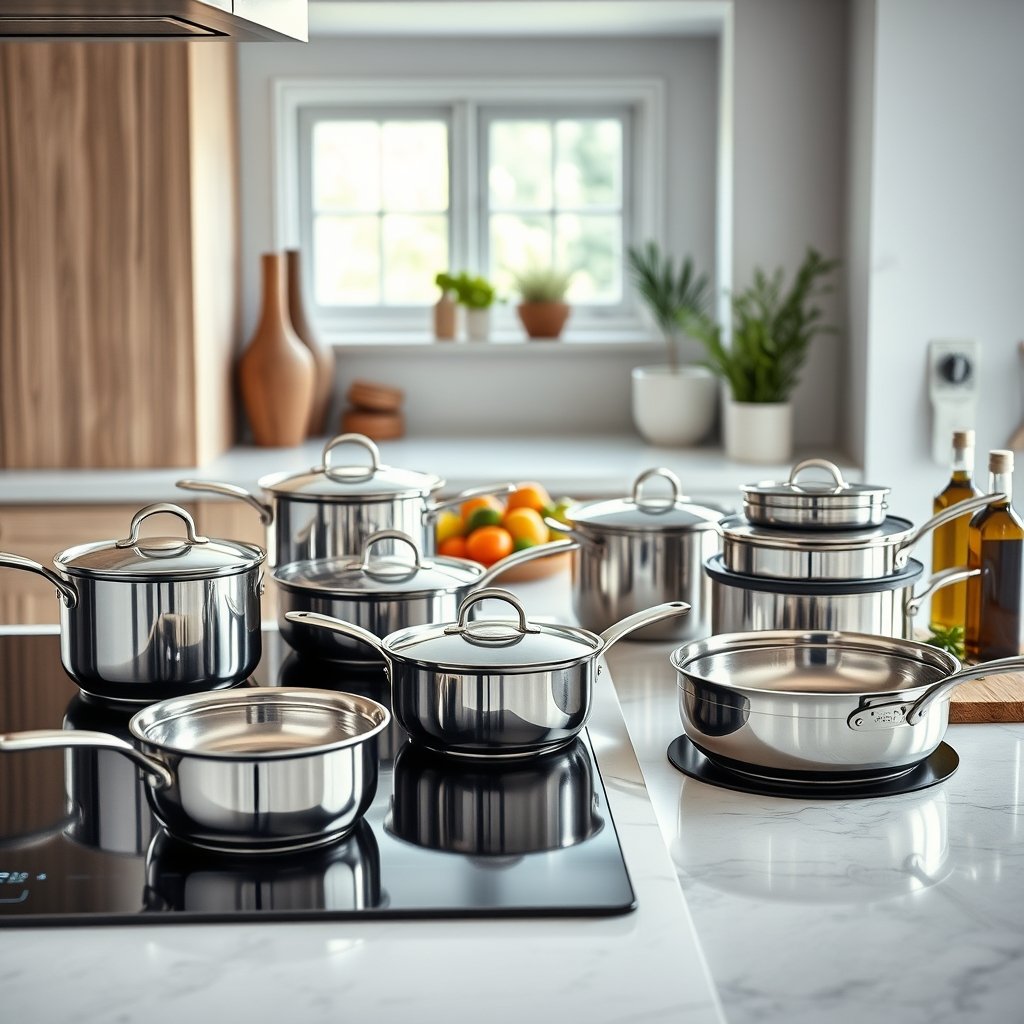
Nearly every major cookware brand now makes induction compatible cookware easy to spot. In 2024, roughly 85 percent of the well known cookware brands—including T-fal, All Clad, Calphalon, Circulon and Anolon—sell sets that are clearly labeled “induction ready” right on the packaging or bottom of each piece.
When it comes to price, a complete set averages around $250. Entry-level induction ready pots and pans run from $80 to $150. Mid-range sets cost $150 to $300, and top tier lines (think All Clad or Le Creuset) can reach $300 to $600. Many brands offer both budget and premium lines, so there is something for most kitchens.
Be sure to check internal reviews for tested sets. For instance, our review of the Amazon Basics Non Stick Kitchen Cookware 8-Piece Set spotlights a budget option for new induction users, while the T-fal Ultimate Hard Anodized Nonstick Cookware Set offers even heating for mid to premium buyers.
Which materials actually work on induction (and pros and cons)
Good induction cookware comes down to the right materials:
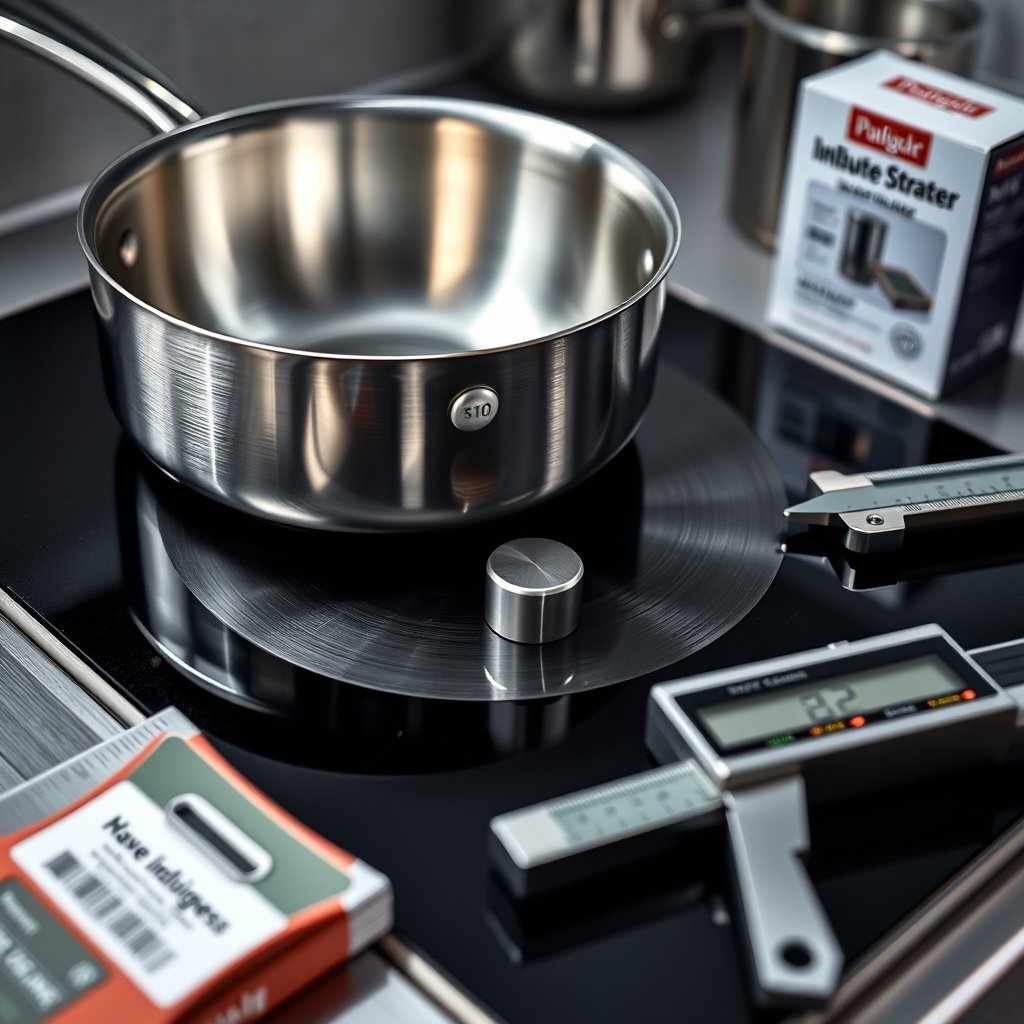
- fully clad stainless steel pans: Most modern stainless pans work, especially those with an aluminum (or copper) core for even heating. They are durable, dishwasher safe, and do not react with food. Just make sure they are labeled induction compatible. Stainless by itself does not always work—magnetic grade is required.
- induction ready cast iron: Always induction ready. Great heat retention and browning, but heavy and needs care to avoid chipping enamel. Works for stews, braises, and roasting.
- Aluminum with magnetic base: These pans add a steel plate to the bottom for magnetic contact. Lightweight and affordable, but may have less even heating if the base is too thin or the magnetic plate is small.
All our recommended sets in the Consumer Reports lab tests are induction compatible, but the difference is in how well they perform over time and under high heat. Most stainless steel collections are now compatible as long as you check that magnetic core is present.
Buyers should beware that not all stainless is equal. Opt for fully clad construction (metal layered throughout) instead of disc-bottomed or thin sided pans for better heat distribution and flatness.
The three buyer complaints you must avoid (and how to avoid them)
Three recurring issues show up in verified buyer reviews of induction ready pots and pans:
- Warping: Thin or poorly constructed bases can warp after repeated exposure to high heat, making pans wobble and lose direct contact. This kills performance.
- Audible noise: Some pans make a distinctive clicking or high pitched whine when the induction element causes magnetic vibration. Cheap or uneven bases do this the most.
- Uneven heating: Mostly in thinner or disc-bottomed pieces, leading to hot spots and scorched food. Full cladding reduces this risk.
| Issue | Cause | How to Avoid |
|---|---|---|
| Warped base | Thin base metal, repeated overheating, rapid cooling | Choose pans with base thickness of at least 3 millimeters. Let hot pans cool gradually, and avoid running cold water over a hot pan. |
| Clicking/whining noise | Thin, uneven, or loosely bonded base; very high heat | Select medium to heavy base, use moderate heat settings, and check for positive reviews regarding noise. |
| Uneven heating | Non-clad or very thin body | Pick full clad pans or those advertised for even heating. Avoid single ply stainless or low cost unbranded pieces. |
If in doubt, pick sets from known brands or check the stainless frying pan set crafted in Italy, designed with 5 ply construction for durability and consistent results. Also, avoid over tightening pan handles or banging cookware against the cooktop, as physical stress can trigger warping and damage.

Exact tech specs shoppers should demand (the three missing details competitors omit)
To maximize the value and lifetime of your investment, demand these overlooked technical specs for any magnetic cookware set:
- Magnetic steel composition: Look for clear documentation of magnetic grades such as 18/0 or equivalent—these guarantee strong attraction and consistent cooking. If a brand does not disclose this, ask or test it yourself.
- Base thickness and flatness: The ideal induction base should be at least 3 millimeters thick, perfectly flat, and robustly bonded (clad) to the pan body. Flatter bases equal better efficiency and fewer hot spots.
- Warranty or third party certification: Reliable brands back their induction ready cookware with at least a 1 year warranty, often longer. UL or other certifications add assurance. If there is no warranty, reconsider your purchase.
These details are rarely listed with entry-level sets, but mid and premium lines almost always mention them. Do not hesitate to ask customer service to provide these numbers, and if you buy online, bookmark the product sheet for your records.
Want more assurance? See our in depth review of the Amazon Basics Stainless Steel Cookware 11-Piece Set, which includes clear labeling throughout for induction compatibility and oven safety.
How to test cookware in person and online (practical checklist)
Whether shopping at a store or browsing reviews online, use this checklist for a magnetic cookware set that will last on any induction hob:
- magnet test: Take a basic fridge magnet and check if it clings strongly to the base center. No stick means no induction compatibility.
- Base flatness: Place the pan on a clean glass or stone surface. It should not rock or have visible gaps at the edge.
- Read labels or specs: Packaging or the bottom of most new pans will say “induction compatible” or “induction ready”. Nearly 85 percent of brands label this clearly.
- Base thickness or clad info: Look for “fully clad” or specified measurements. Anything under 2 millimeters should be avoided for regular stovetop use.
- Warranty language: Scan for warranty terms and certification; some brands even print them on retail boxes.
Online, also inspect spec sheets and customer reviews for mentions of “no warping” or “quiet during cooking.” For specialty needs, see our review of the CAROTE Nonstick Pots and Pans Induction Cookware Set, which combines a magnetic base with durable nonstick coating.
Buying by budget — recommended set types and examples
The right cookware for induction is available at every budget. Here is what you can expect:
- Entry-level ($80 to $150): Simple stainless steel sets with magnetic base discs or value nonstick pans like Amazon Basics Non Stick Set. Best for new users or backup sets.
- Mid-range ($150 to $300): Full clad stainless sets, such as Calphalon or Circulon, usually include lids and a mix of pot and pan shapes—a step up in durability and feel.
- Premium ($300 to $600): High end pieces include All Clad, Le Creuset enameled cast iron, or Italian clad sets. They are often five ply for lifetime use.
Check for official induction labeling on all price levels. Top brands like T-fal, All Clad, Calphalon, Circulon, and Anolon all provide true induction ready pots and pans, but the difference is visible in weight, branding, and documented warranties.
Maintenance and usage tips to extend life and avoid warping or noise
You can dramatically extend the life and performance of your induction cookware with simple habits. Here is what works, backed by real buyer reviews and pro guidance:
- Avoid pouring cold water into a hot pan or soaking a hot pot—this sudden change causes warping, the number one complaint among induction users.
- Let pans cool fully before cleaning. Hand wash when possible, especially for nonstick and fully clad lines.
- Do not overheat pans when empty. Heat them for a minute or less, then add food or oil.
- Never bang the base on the cooktop or drop metal utensils aggressively.
- Follow the manufacturer’s guide for cookware for induction—especially for cleaning and use of metal tools. This preserves the nonstick or clad layers.
Our CAROTE set and T-fal Ultimate set guides include additional care tips tailored to their coating and construction.
Quick decision checklist (one page summary for shoppers)
- Magnet test the base—strong stick means go.
- Look for “induction ready” or “induction compatible” labels.
- Base thickness and flatness are listed or reviewed.
- Warranty or certification present (on package or brand site).
- Matches your budget ($80 to $600 range covers all tiers).
- Recent reviews report no warping, noise, or uneven heating complaints.
Remember: roughly 85 percent of known brands label induction compatibility clearly, so finding the best induction compatible cookware is easier than ever.
FAQ
What pans work on induction cooktop?
Only pots and pans with a flat, magnetic bottom will work. Stainless steel with a magnetic core, enameled cast iron, and aluminum with a steel disc are ideal. Use a magnet to test the base—if it sticks, it works.
Is my old cookware usable on induction?
If your current pots or pans pass the magnet test (magnet strongly sticks to the flat bottom), they can be used on induction. If not, you will need to buy new induction compatible cookware.
Do all stainless steel pans work with induction?
No. Only those made with a magnetic grade of stainless (often called 18/0) or with an added magnetic core are compatible. Check for labels or use a magnet to confirm.
How do I stop the clicking or whine sound?
Clicking or whining usually comes from thin or uneven induction base construction. Opt for thicker, fully clad pans, and avoid using maximum heat when possible. Sometimes simply reducing the power level can stop the noise.
Where can I find reviews and lab-tested recommendations?
See our reviews for the stainless frying pan set, T-fal set, and CAROTE induction cookware guide for tried and tested results by real users.
Conclusion
Choosing cookware for induction does not have to be guesswork. Focus on strong magnetic attraction, proven brand reliability, clear induction labeling, and robust base construction for lasting performance. Always read reviews, check labels, and invest in at least one premium pan if you can. If you follow these steps, you will enjoy flawless results and avoid the common pitfalls that trip up first-time users. Make the switch today and let your induction kitchen work at its best. Need more detail or want tailored choices? Browse our dedicated cookware reviews now.