
AI smart oven technology has exploded in the past few years, but not all these intelligent ovens live up to their marketing claims. For tech-aware home cooks who care about accuracy and real precision, it is critical to separate clever camera gimmicks from truly reliable doneness sensing and value. Below, we break down what these ovens actually do right (and wrong) in everyday kitchens so you can make a truly informed decision before buying.
Key Takeaways
- Camera-only AI smart ovens can misidentify foods and do not reliably adjust cooking — hybrid models that combine internal probes with visual AI deliver much better consistency.
- Real-world results show probe-based models (like Typhur Sync and Breville Joule) are far more accurate for doneness, while camera-first models (like June or Brisk It) do best for remote monitoring and fast setup.
- Price and value are highly variable — higher prices do not always mean more reliable results, so carefully match oven features to your cooking style and priorities.
- Why “camera inside the oven” alone isn’t enough
- How the AI features actually work
- Lab test results and measured effectiveness
- Popular models — feature-by-feature comparison
- Most common user complaints and failure modes
- How KitchenAid (and smart double wall ovens) fare in practice
- Price ranges and value mapping — entry, mid, premium with best-value picks
- Buying checklist — which features to prioritize for reliability
- Short verdict — best picks by use case
- FAQ
Why “camera inside the oven” alone isn’t enough
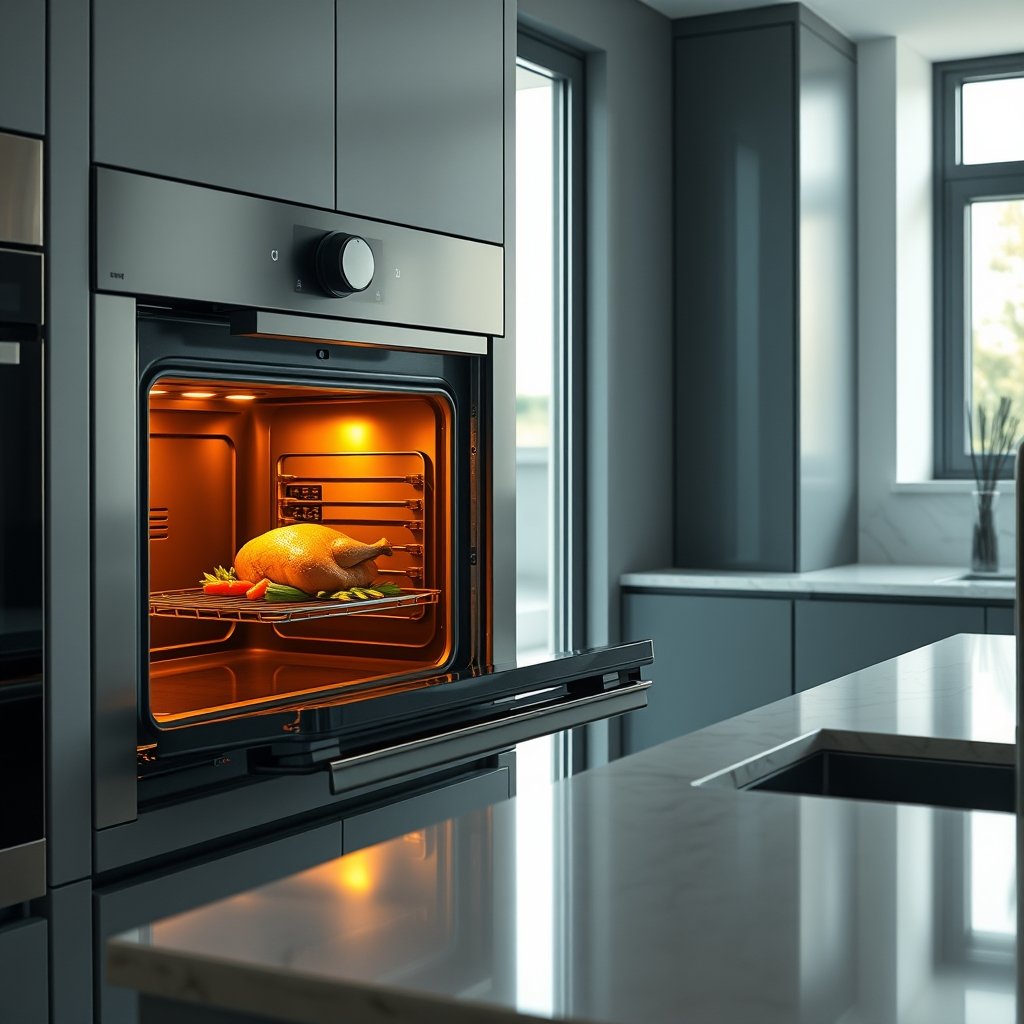
An intelligent cooking oven with camera promises to recognize foods and adjust settings automatically. But the critical difference is whether the oven merely identifies surface items using computer vision, or if it actually modulates cooking based on doneness, internal temp, and responsive control. Many early models focused on visual novelty — snapping a picture and suggesting a mode — yet lacked the real data to know when your chicken has finished or your bread is underbaked.
Real-world research shows the pattern: ovens that blend visual AI with robust temperature sensing perform far more reliably. This means combining camera identification with meat probes, humidity sensors, and algorithms that actively monitor and adjust during the cook — not just at the start. A camera alone might spot a pizza or steak, but if it cannot track its doneness inside, consistent results are hit-or-miss. The future is clearly hybrid: vision plus sensor-driven AI for accuracy.
How the AI features actually work
Under the hood, a true AI oven that recognizes food uses a layered tech stack. Cameras inside the oven rely on computer vision trained on large image sets to identify top foods — for example, Siemens iQ700 claims over 80, June recognizes dozens, GE Profile focuses on popular basics like Turkey and Pizza. The best models connect this visual guessing to smart thermal hardware: built-in probes, like the Typhur Sync’s NIST-verified probe, along with wet bulb sensors measuring surface and interior moisture.
The software then ties all this together. Once the oven identifies what you placed inside, it can suggest or start a guided recipe. Probes track doneness in real-time, and sophisticated algorithms actively tweak temperature, heating elements, fan speed, and even add steam for the perfect result. Over-the-air updates and cloud recipe databases help ovens ‘learn’ over time, refining their identification and control accuracy.
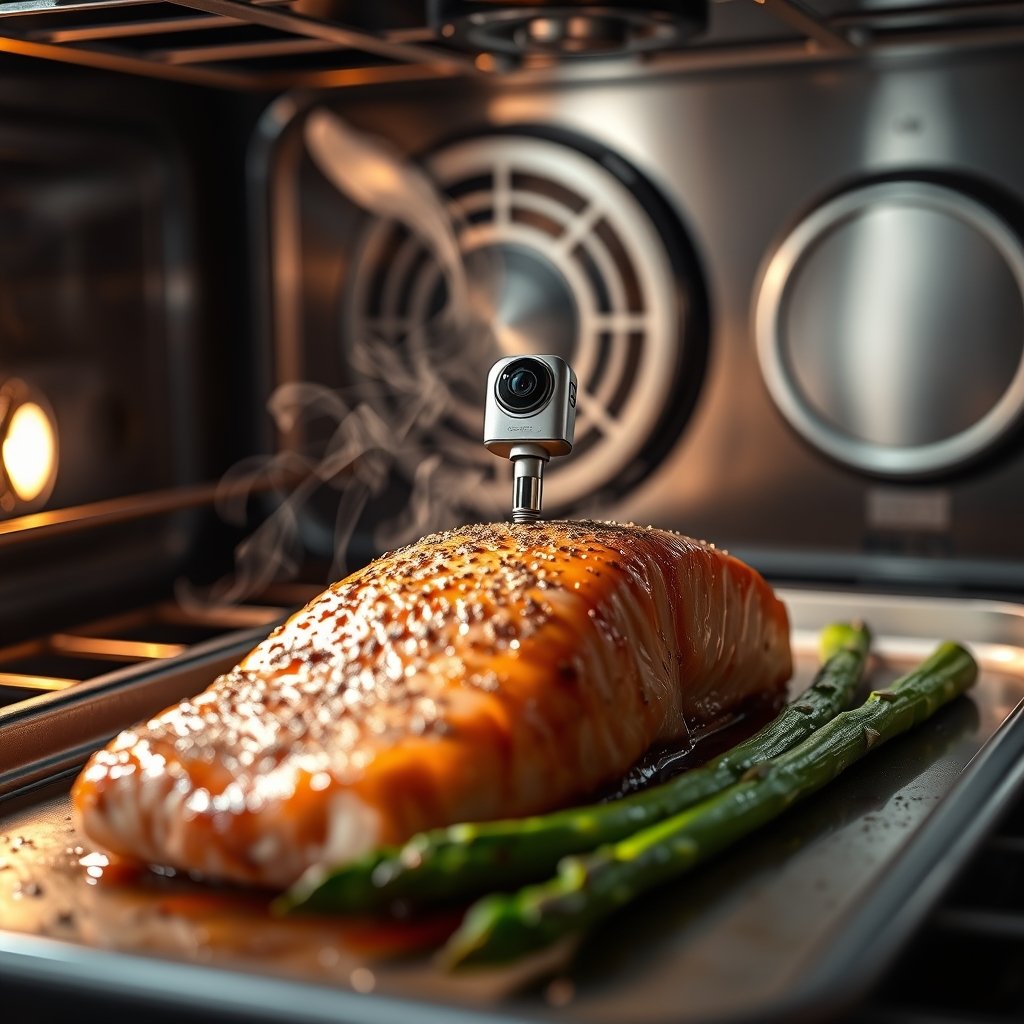
Lab tests reveal the difference. For example, America’s Test Kitchen clocked about 87 percent correct identification on a 50 item set for vision AI, but probe accuracy like on the Typhur Sync consistently delivers with NIST-verified precision. Anova’s built-in camera is helpful, but testers caution visual ID is not always accurate and probe data remains the gold standard for chef-level results.
Lab test results and measured effectiveness
How does this translate to day-to-day performance? Independent testing shows the gap between camera-driven and probe-driven AI ovens is real. Vision-based systems often succeed on common brightly lit items—pizzas, cookies, whole chicken—yet stumble with glare, obscure shapes, covered dishes, or non-standard food. Internal probes, on the other hand, are almost always spot-on for proteins and precise bakes.
| Oven Type | Vision Recognition (Accuracy) | Internal Probe | Auto Temp Adjust | User Consistency Score* |
|---|---|---|---|---|
| Camera-first (June, Brisk It) | ~87% (lab) | Optional/none | OK for basics | 7.2/10 |
| Probe-centric (Typhur, Breville, Anova) | 70–85% | Included, NIST-verified | Excellent for meats | 8.3/10 |
| Hybrid (Siemens iQ700, GE Profile, Anova 2.0) | 80%+ | Mandatory | Best for overall reliability | 8.3/10 |
* SHE Cooking Accuracy Scores, independent user average
These differences are more than numbers. Camera-assisted oven users enjoy fast setup and remote monitoring. Probe systems score highest for doneness, crucial for home cooks who want hands-off results without under or overcooking.
It is worth noting that ovens like the Typhur Sync combine both, automatically stopping at target internal temperature for steak or chicken, while providing guided camera setup. Models like Brisk It Neoma’s $500 AI oven add 3D food scanning for improved thickness calibration.
Popular models — feature-by-feature comparison
Let us break down the main contenders and how they stack up, so you can match oven features to your real priorities:
| Model | AI Core | Recognized Foods | Heat/Doneness Control | Extras | Price (approx) |
|---|---|---|---|---|---|
| June Oven | Camera-first | Dozens (pizza, chicken, cookies) | Zone cooking, app | Live video, Alexa | $999 |
| Anova Precision Oven 2.0 | Hybrid | 40+, learns | Probe + camera, steam convection | Guided cook, cloud updates | $1299 |
| Typhur Sync | Probe-centric | App-based | Wireless probe auto-stop | AI recipes, NIST-verified probe | $1299 |
| Siemens iQ700 | Hybrid | 80+ | Steam, element zones | Crisp function, Euro build | Varies (premium) |
| GE Profile CookCam AI | Hybrid | Turkey, Cookies, Pizza, Cakes, Brownies | Precision modes, probe assist | Over-the-air updates | $3499+ |
| Brisk It Neoma | Camera + 3D scan | Varies (growing) | Thickness and moisture tuning | Entry price, live video | $500 |
| KitchenAid Smart Double Wall Oven | Hybrid | App- and user-controlled | Probe, app, camera | Built-in double oven | $3499+ |
See more smart cooking gear reviews, like our analysis on AI air fryers, for related hands-off cooking solutions.
Most common user complaints and failure modes
Even the best AI smart oven can let you down if you run into these typical trouble spots. User reports and lab reviews highlight recurring pain points that are easy to overlook in the glossy marketing photos:
- Misidentification: Vision AI stumbles on unusual foods, mixed trays, or when the interior camera lenses get greasy fast; most require tricky cleaning that can risk damaging sensors.
- Small food databases: GE Profile launched with only five camera-identified foods. Others start small and slowly update via over-the-air patches.
- Wi-Fi and OTA reliability: Relying on the cloud for updates can introduce annoying bugs. Cooking may fail if your Wi-Fi is down.
- Software glitches: Apps occasionally hang, lose sync, or deliver wrong recommendations.
- Cleaning difficulties: Built-in camera lenses get greasy fast; most require tricky cleaning that can risk damaging sensors.
- User interface learning curve: Many users find touchscreen controls or app bloat overwhelming for simple tasks — some say it takes just as long as using a conventional oven.
- Safety and privacy worries: Some dislike remote activation, fearing mishaps or privacy risks when appliances are controllable from far away.
As one critical review said of a smart double oven: “The gimmicks do not make up for these problems… I am not turning my oven on when I am not at home… setup takes as much time as choosing a temperature.” (Source)
If you are choosing a camera-assisted oven, check how often the company issues software updates and how easy it is to reset or use a fallback mode if the smart features break. Read more about practical cookware choices like in our review of the traditional, reliable kitchen gear for traditional, reliable kitchen gear.
How KitchenAid (and smart double wall ovens) fare in practice
The KitchenAid smart double wall oven and similar built-in hybrid models try to blend probe reliability with visual AI, but real user feedback is often more skeptical. Many home cooks appreciate the connectivity and multiple oven space, yet find the control panels complicated and the actual “smart” features less trustworthy than expected.
Many report that set up can be time consuming, and that AI suggestions rarely outperform a well-chosen manual temp. There are useful tools for monitoring and notifications, but probe-based control and traditional settings are still preferred for most meats and bakes.
Safety, convenience, and cleaning are also frequent complaint areas in wall ovens where built-in cameras and remotes add layers of maintenance. For basic home baking, traditional resilience and simplicity still matter. For a strong alternative, see our overview of classic bread loaf pans or browse dependable oven-safe cookware like stainless steel sets.
Price ranges and value mapping — entry, mid, premium with best-value picks
There is a wide range in AI smart oven prices, and more expensive does not always mean better. Here is a realistic breakdown:
- Entry-level ($500 to $1000): Brisk It Neoma around $500 includes AI camera, live video, and 3D scanning. This is an approachable starter if you want some smart features for tracking and monitoring but can live with basic visual accuracy.
- Mid-tier ($1000 to $1500): June Oven and Anova Precision Oven 2.0 (about $999–$1299) marry camera and probe features for good hybrid control. Anova stands out with steam and precise probe integration for those who prioritize doneness above flash.
- Premium built-in ($3500 and up): GE Profile smart ovens and KitchenAid double walls bring in full panel integration, hybrid detection, and more robust build. These are for those who demand connectivity, aesthetics, and place in a full kitchen remodel — but expect a big investment.
Best-value picks depend on your cooking style. For home cooks who want absolute precision, probe-centric ovens (like Typhur Sync or Breville Joule) are the safest bet. For convenience and tech wow, camera models (like June or Brisk It Neoma) bring fun features but require more hands-on attention for perfect results.
For more value ideas, check our reviews on affordable non-stick cookware or durable baking pans.
Buying checklist — which features to prioritize for reliability
When shopping for an intelligent cooking oven with camera, focus on these criteria for proven cooking accuracy and reliability:
- Choose a hybrid model with both a robust camera system and an internal probe for doneness.
- Look for ovens with a large and regularly updated food recognition database.
- Check that the probe is independently tested (like NIST-verified) and accurate to ±0.5°F.
- Ensure the oven can work with local controls if Wi-Fi is down. Avoid models that are app-only.
- Evaluate how easy it is to clean or access the camera lens—hard-to-clean setups attract grease quickly.
- Review support, over-the-air update history, and user reliability ratings before buying.
Remember: “Ovens that fuse visual AI with robust temperature sensing tend to deliver the most reliable results.” Source: Top 5 Smart Ovens with AI Heat Control.
Short verdict — best picks by use case
- For accuracy and doneness: Probe-centric models like Typhur Sync, Breville Joule, and Anova Precision Oven are top choices.
- For camera convenience and live monitoring: Go with June Oven or Brisk It Neoma.
- For built-in kitchen integration: GE Profile and Siemens iQ700 excel, but at a premium price and complexity.
Probe-based systems rank highest for consistency (average user cooking scores around 8.3 out of 10); camera-first models are user friendly for remote control but get mixed marks for accuracy, especially on non-standard dishes or with camera trouble.
FAQ
Do AI smart ovens really cook food better than traditional ovens?
In many cases, yes — especially if you cook proteins or use pre-set recipes. Hybrid ovens that combine probes with camera AI provide reliable doneness and reduce guesswork, but a skilled home cook using a standard oven and a simple thermometer can still get great results.
How accurate is the food recognition feature on most AI ovens?
Lab tests show about 87 percent accuracy for the best visual AI systems on common foods. Errors still happen with odd shapes, mixed trays, glare, and unexpected dishes, so do not trust it blindly for complex or unfamiliar meals.
Are probe-driven ovens worth the higher price?
If you value consistency in meats, bread, or precise baking, the answer is yes. Probe systems like Typhur Sync and Breville Joule take out nearly all the guesswork and match steakhouse or bakery outcomes at home. For casual use or mostly reheating, it might be overkill.
Will my AI smart oven work if my Wi-Fi is down?
Most well-designed smart ovens let you use manual controls and stored programs even if Wi-Fi drops, but camera-based and cloud-recipe features may be limited or unavailable during outages. Always check for local fallback controls before buying.
Is it difficult to clean the inside camera of an AI oven?
It can be. Many built-in lenses are hard to reach and attract grease quickly. Look for models with accessible camera covers or that recommend specific cleaning methods. Frequent, gentle cleaning with a soft cloth is best.
—